
Herbaceous layer · Tropical rhizome / spice
Turmeric
Curcuma longa
A frost-tender rhizome crop for warm, sheltered, moist niches. Grown for culinary rhizomes and lush understorey foliage where heat allows.
Also known as: Turmeric
Layer
Herbaceous layer
Climate
Subtropical
Sun
Partial shade to filtered sun; protect from harsh wind.
Water
High during active growth; reduce as foliage dies back.
Soil
Rich, free-draining but moisture-retentive soil.
Size
0.8–1.2 m H · 0.5–0.8 m W
Growth
Moderate in warm seasons
Frost
Very frost tender; dig and store rhizomes or mulch heavily in marginal sites.
Edible uses
Rhizomes (culinary)
Harvest window
Late autumn when foliage yellows
Ecological functions
Understorey cover · Seasonal biomass
Wildlife value
Dense seasonal cover
Human uses
Culinary spice · Colouring
Propagation
Rhizome pieces with buds.
Maintenance
Plant after frost; mulch; lift or heavily protect through cold winters in cooler pockets.
NZ growing notes
Possible in warm sheltered Northland–BoP gardens. Yields vary sharply with heat units.
In the food forest
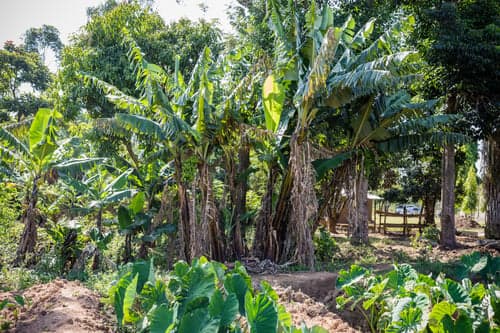
Turmeric fills warm herbaceous niches with banana, ginger and taro. It wants moisture and shelter without waterlogging.
Establishment
Plant rhizome pieces in late spring into rich mulched soil. Water through summer. Harvest when tops die back, saving seed rhizomes for next year.
NZ honesty
Warm-only crop. Fruiting/yield claims for cooler NZ need local proof — many gardeners treat it as a seasonal experiment.
Suitable NZ regions
Companion plants
Related guilds
References
- NZ warm-climate kitchen garden observation — Heat and frost management decide success.