
Herbaceous layer · Tropical aromatic grass
Lemongrass
Cymbopogon citratus
A clumping aromatic grass for warm sheltered gardens. Culinary stems and leaves plus useful edge biomass in subtropical food forests.
Also known as: Lemongrass
Layer
Herbaceous layer
Climate
Subtropical, Warm temperate
Sun
Full sun.
Water
Regular moisture; dislikes prolonged drought.
Soil
Fertile free-draining soil with organic matter.
Size
0.8–1.5 m H · 0.6–1 m clump W
Growth
Fast in warm seasons
Frost
Frost tender; tops burn in frost; clumps may survive light frost with mulch in warm pockets.
Edible uses
Stems (culinary), Leaves (tea / flavouring)
Harvest window
Year-round in frost-free sites; warm months elsewhere
Ecological functions
Edge biomass · Aromatic pest confusion (practical tradition) · Soil cover in clumps
Wildlife value
Dense cover for insects
Human uses
Culinary flavouring · Teas · Chop-and-drop
Propagation
Division of clumps.
Maintenance
Divide congested clumps; protect from hard frost; keep watered in dry heat.
NZ growing notes
Reliable culinary plant in warm northern gardens. Cooler districts may overwinter clumps only in exceptional microclimates.
In the food forest
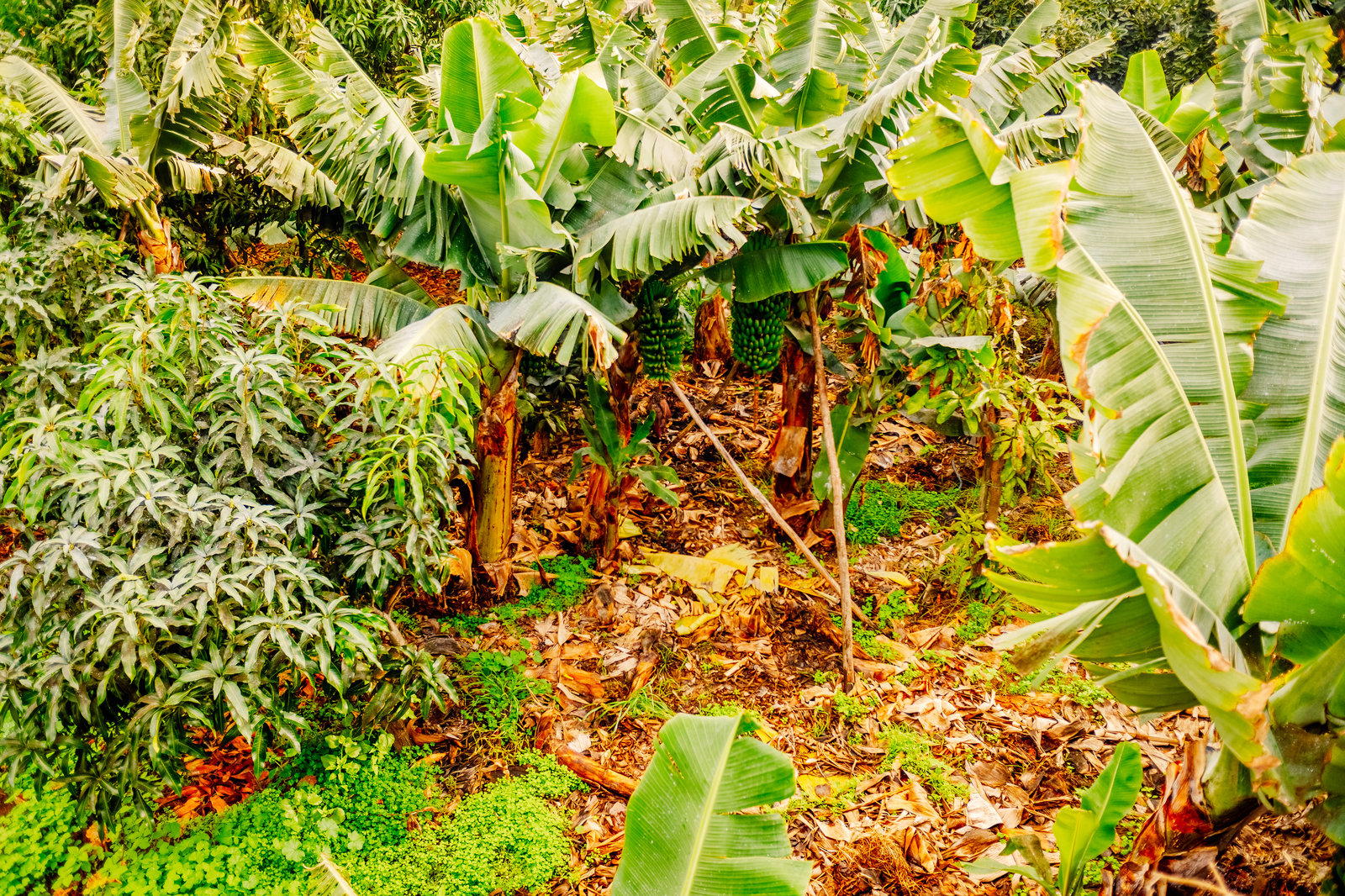
Lemongrass sits in the herbaceous layer on warm sunny edges beside banana, ginger and guava. Harvest outer stems and leave the clump growing.
Establishment
Plant divisions in spring into fertile mulched soil. Water regularly. Divide every couple of years. Mulch heavily before cold snaps.
NZ honesty
Warm coastal North Island honesty. Further south treat as a summer container or unproven overwintering plant unless locals already succeed.
Suitable NZ regions
Companion plants
Related guilds
References
- NZ subtropical kitchen garden practice — Warm-site culinary grass.