
14 min read · Updated 8 September 2024 · beginner
What is a food forest?
A practical Aotearoa introduction to food forests as layered edible ecosystems, with honest limits around climate, labour and site observation.
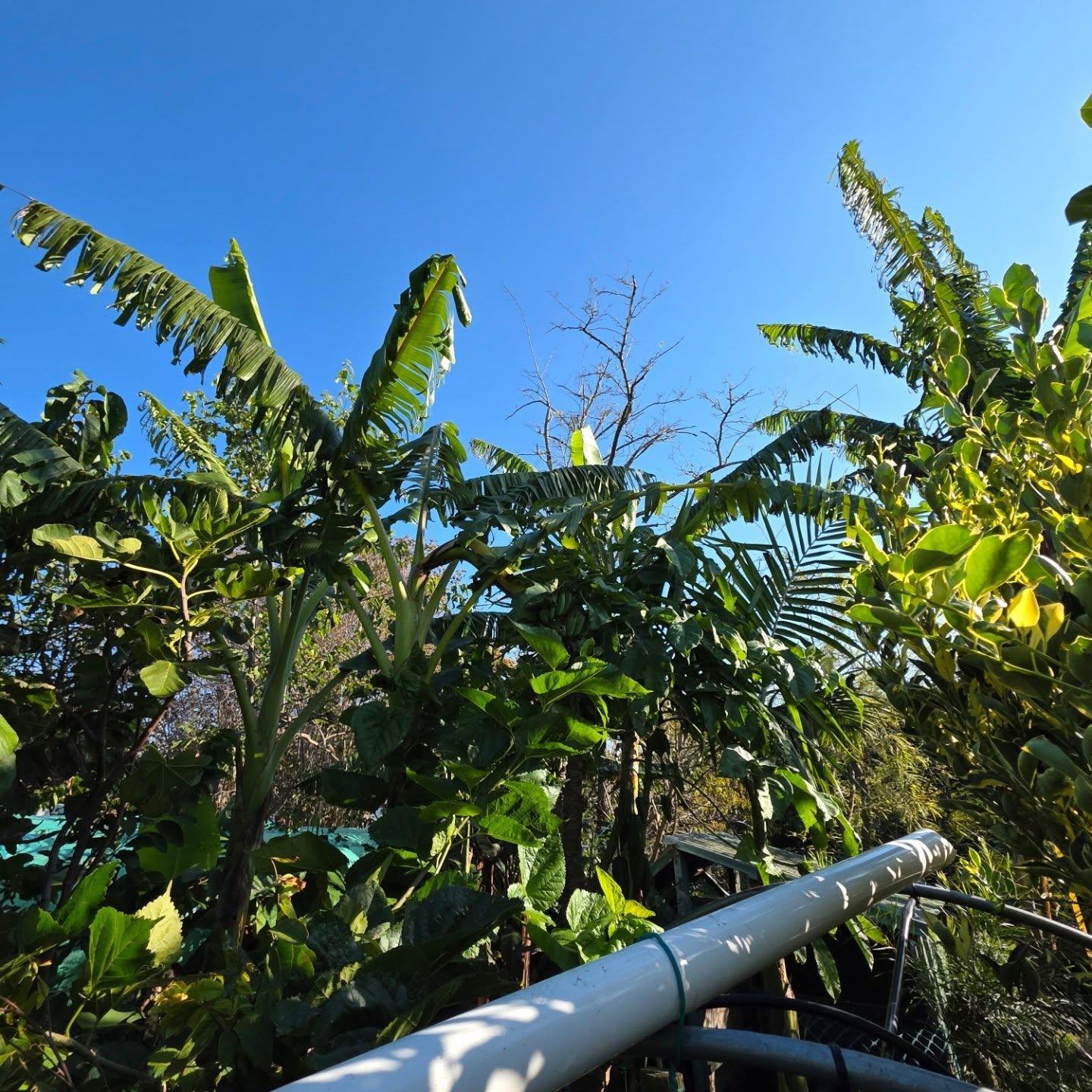
A food forest is a designed edible ecosystem
A food forest is a way of growing food, shelter, soil life and habitat in the same planting. It borrows the structure of a young natural forest: taller trees, smaller trees, shrubs, herbs, groundcovers, roots, climbers and decomposers all occupy different spaces. In a food forest those layers are chosen and managed for kai, fertility, pollination, shelter and resilience.
That does not mean throwing fruit trees into grass and hoping nature will finish the job. A good food forest is intentional. It has paths, harvest access, spacing, water logic, shelter and maintenance rhythms. It is often more forgiving than a bare-soil orchard once established, but it is not maintenance-free magic.
For Aotearoa New Zealand, the core question is not "what does the diagram show?" but "what does this exact site allow?" A warm sheltered Bay of Plenty slope can support very different plants from an inland frost hollow near the central plateau. A coastal Northland section can still be too windy for avocado. A cool South Island garden can still be a food forest without banana or taro.
The main idea: layers plus functions
Layers describe where plants sit in space. Functions describe the work they do. A feijoa can be fruit, shelter, a boundary hedge and bird habitat. Comfrey can be biomass, bee forage and soil cover, but it should not be sold as a miracle fertiliser. Nasturtium can cover bare soil and provide edible flowers, while also needing management around small seedlings.
The most useful food forest design habit is to ask what job is missing. Is the site windy? Start with shelter. Is the ground bare? Add mulch and living cover. Is the fruit tree struggling? Check drainage, water and light before adding companions. Is the family overwhelmed? Reduce the size of the first stage.
What makes it different from an orchard
An orchard usually focuses on rows or blocks of fruit and nut trees, often with grass or cultivated soil underneath. A food forest can include orchard trees, but it tries to make the understorey productive and useful too. It may use a comfrey fertility strip, a feijoa boundary guild, or a suburban mixed fruit guild to turn unused edges into working layers.
The difference is not wildness. It is design density and relationship. The understorey must still let you prune, harvest and inspect pests. A dense planting that hides trunks, blocks paths and traps humidity is not better simply because it has more species. In small gardens, fewer woody plants with excellent mulch, access and pruning often outperform a crowded "seven layer" shopping list.
What a food forest is not
A food forest is not an instant forest. The first two to three years usually involve watering, mulching, replacement planting, weed control and protective pruning. It is also not a guarantee of no pests. Diversity can reduce some risks and support beneficial insects, but observation still matters. See pests: observation, not panic before treating every insect as an emergency.
It is not a universal species list. If your site frosts hard, learn from cool-climate food forests and the frost-prone productive garden. If you are in coastal Bay of Plenty or Northland, subtropical options may be possible, but frost and microclimate and wind and shelter still decide success.
It is not a medical system. This site discusses food, ecology and garden practice. It does not make medical claims for plants, tonics or remedies.
A practical first version
For many NZ homes, a first food forest can be one edge or one 20 to 80 square metre zone. Keep a clear path. Plant one or two structural fruiting shrubs or low trees. Add mulch. Add a small support layer such as comfrey and seasonal groundcovers. Observe for a year before buying expensive frost-tender canopy.
Good starter paths include the small suburban food forest, narrow boundary planting and existing orchard conversion patterns. These patterns scale down the romantic forest idea into decisions a household, school, marae or community garden can actually maintain.
Start with maps, not wish lists
Before ordering plants, sketch sun, winter shade, frost, wind, wet patches, dry eaves, slopes, services and access. If you want help turning those observations into a plan, use the free Kai Resilience grower tools. Then choose plants that match the map. Food forests succeed when the design respects the site first and the catalogue second.
A simple first-year test
If the idea still feels large, make the first year a test bed. Plant one fruiting spine, one mulch plant, one groundcover and one clear path. Record watering, pests, growth and harvest. That small living test will teach more about your section than a copied masterplan, and it gives you confidence before expanding.
Editorial note: this introduction is written for Aotearoa, but it carries lessons from tropical food systems lived with as childhood ordinary, from forests established under Pacific rain, and from the working urban canopy at Troppo in Te Puke. Some claims are strongly supported by everyday growing experience; others are best treated as hypotheses. Where evidence is thin, test small, observe carefully and avoid turning enthusiasm into certainty.
References
- Permaculture food forest design practice — Layered ecosystem concepts adapted here for Aotearoa garden conditions.
- Kai Resilience grower tools — Free planning tools for turning broad ideas into site decisions.