
Shrub layer · Nitrogen-fixing shrub (short-lived perennial / annual in cooler sites)
Pigeon pea
Cajanus cajan
A short-lived nitrogen-fixing shrub for warm sites. Provides biomass, light shade and edible seeds where summers are long enough.
Also known as: Pigeon pea
Layer
Shrub layer
Climate
Subtropical, Warm temperate
Sun
Full sun.
Water
Moderate; drought tolerant once established but prefers summer moisture for growth.
Soil
Well-drained; tolerates poorer soils better than many fruit trees.
Size
1.5–3 m H · 1–2 m W
Growth
Fast in warm seasons
Frost
Frost tender; killed or severely damaged by hard frost.
Edible uses
Seeds / pods (cooked)
Harvest window
Late summer–autumn where climate allows ripening
Ecological functions
Nitrogen fixation · Nurse shrub / light shade · Biomass · Pollinator flowers
Wildlife value
Insect forage
Human uses
Cooked pulses · Chop-and-drop · Living support / nurse plant
Propagation
Seed; soak before sowing.
Maintenance
Tip prune for bushiness; cut back for mulch; replant as plants age out.
NZ growing notes
Best north of the central North Island frost line. In cooler districts treat as a summer biomass annual and do not rely on seed harvest without local trial.
In the food forest
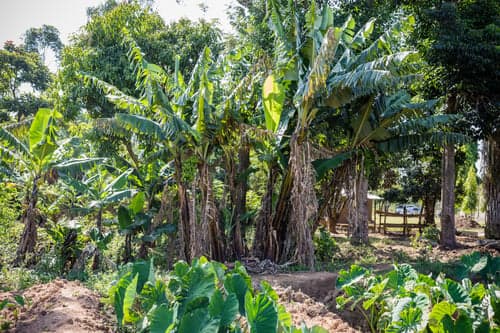
Pigeon pea is a temporary shrub-layer nurse: nitrogen, dappled shade and chop-and-drop biomass around avocado, banana and citrus while permanent plants establish.
Establishment
Sow soaked seed in warm soil after frost risk. Tip-prune for bushiness. Cut for mulch through the season. Replant as woody stems age out or frost kills plants.
NZ honesty
Warm coastal North Island only for perennial behaviour and seed harvest. Elsewhere treat as a summer biomass annual — fruiting/seed claims need local proof.
Suitable NZ regions
References
- Practical subtropical gardening (NZ) — Used as nurse plant in warm coastal gardens.